Automate sales follow up to close more deals faster in 2026
Learn how to automate sales follow up to boost response rates by 30% and close deals faster. Discover the best tools and frameworks like the 2-2-2 rule.
Most sales teams lose momentum after the first contact. It's a common pattern: a lead comes in, a rep sends a quick introductory email, and then... nothing. The deal goes cold because everyone is too busy managing their current pipeline to chase the "maybe" pile.
But here is the reality of modern selling: 80% of sales require at least five follow-ups, yet most reps give up after just one or two. That's a massive gap between effort and opportunity. If you're relying on manual memory to track your leads, you're likely losing thousands of dollars in un-billable hours and missed revenue every single month.
We've found that how AI handles edge cases is the real difference between a rigid system and one that actually helps you scale. By unlocking true business autonomy, your team can focus on relationships while the technology manages the logistics.
When you automate sales follow up, you aren't just sending more emails. You're removing the operational friction that stops your team from doing their best work. The goal is to create a system where the "boring" admin tasks handle themselves, so your reps can focus on the high-value conversations that actually close deals.
What is sales follow-up automation?
At its heart, sales follow-up automation is the use of CRM workflows, rules, and AI to handle repeatable outreach as leads move through your sales funnel. Instead of manually drafting every reminder, the system triggers the right message at the right time based on pre-set conditions.
This doesn't mean you're spamming your prospects. Modern workflow automation allows for personalisation at scale. You can use dynamic fields to pull in a lead's name, company, or specific interests, making an automated message feel like a one-to-one interaction.
We believe in a philosophy of "quiet" automation. It's the idea that the best tools are the ones your team stops noticing because the work just gets done. When you automate sales follow up, you're removing the mental overhead of "Who do I need to call today?" and replacing it with a friction-less flow of activity.
Core components of a high-velocity follow-up system
To build a follow-up machine that actually works, you need to automate three specific areas: routing, sequences, and CRM hygiene.
Lead capture and instant routing
If your inbound leads land in a shared inbox and wait for a manager to assign them manually, you've already lost the race. Automated routing removes this bottleneck by instantly assigning leads to the right rep based on rules like territory, product line, or source.
This ensures that the moment a lead expresses interest, they are owned by a human who is ready to act. It stops leads from sitting in "purgatory" while your team argues over who should take the call.
Automated email and SMS sequences
Speed is the most critical factor in lead conversion. In fact, responding within 5 minutes makes a lead nine times more likely to buy. Since no rep can be at their desk 24/7, automated sequences handle that first crucial touchpoint for you.
This prevents that awkward moment where a prospect answers your question, but your automation keeps asking it two days later.
CRM integration and task logic
Automation works best when it sits on top of a clean source of truth. By integrating your outreach with tools like Xero, MYOB, or your CRM, you ensure that every interaction is logged without manual data entry.
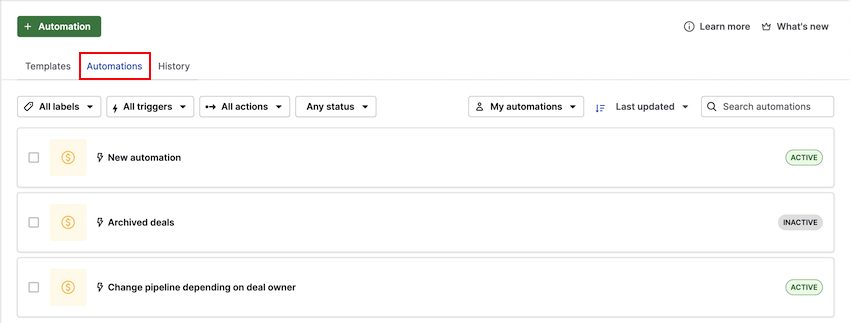
You can also use "required fields" to ensure your pipeline data stays trustworthy. If a rep can't move a deal to the "Proposal" stage without entering a close date and deal value, your forecasting becomes significantly more accurate.
Strategic rules for better conversion
Software alone won't close deals. You need a framework to guide your automation. Here are the most effective rules we've found for high-velocity sales teams.
The 2-2-2 rule for sales outreach
The 2-2-2 rule is a simple cadence that keeps you top of mind without becoming a nuisance.
- 2 Days: Send your first follow-up two days after the initial contact.
- 2 Weeks: If they haven't replied, send a second touchpoint two weeks later with a helpful resource (like a case study or guide).
- 2 Months: For leads that have gone cold, a two-month "check-in" ensures you're there when their budget or priorities change.
The key is to provide value in every message. Don't just "check in" (which is code for "I want your money"). Instead, offer a new perspective or a tool that helps them solve a problem.
The 3-3-3 and 10-3-1 frameworks
If your sales cycle is shorter, you might prefer the 3-3-3 rule (3 emails over 3 days with 3 distinct value points). For long-term enterprise deals, a 10-3-1 framework (10 touches over 3 months for 1 specific goal) might be more appropriate.
Which one you need depends on your industry. A retail customer needs an instant response, while a B2B software buyer might need a longer-term nurture that builds trust over several weeks.
Pricing breakdown for top sales automation tools
Choosing the right tool is about finding the balance between power and simplicity. If you're struggling with the "Zapier tax" or complex enterprise setups, these are the current market leaders for 2026.
| Platform | Entry Price (AUD approx.) | Key Automation Features | Best For |
|---|---|---|---|
| HubSpot | $15/mo/seat (Starter) | Sequences, basic workflows | Growing teams |
| Pipedrive | $39/mo/seat (Growth) | Workflow builder, email sync | Visual sellers |
| Keap | $249/mo (Pro) | Advanced campaign builder | All-in-one SMBs |
| Yesware | $35/mo/seat (Premium) | Gmail/Outlook campaigns | Inbox-only reps |
A director of CRM strategy recently shared in a HubSpot case study: "Reps were duplicating records. Nothing was searchable. We couldn't trust the data. Sales Hub gave us one version of the truth."
Similarly, an entrepreneur using Pipedrive noted: "We had one of our newer clients find $188K worth of revenue after just a few hours of using the platform."
Yesware is an extreme time saver. It helped lift our outreach to another level.
Automate your sales follow-up without the friction
Manual data entry is the silent killer of sales growth. Every minute your best rep spends copying notes from an email into a CRM is a minute they aren't closing deals. If your team is "overloaded" but your revenue is flat, your process is likely the problem.
We help Australian businesses connect their existing tools into a single, friction-less machine. Whether you use HubSpot, Pipedrive, or just Gmail and a spreadsheet, we can automate the "boring stuff" so you can get back to the work that matters.
Let's break it down. You don't need a "rip-and-replace" of your entire tech stack. You just need a partner who understands how to bridge the gaps. Book a Discovery Call today to see how we can recover un-billable hours for your team, or explore our use cases for sales and lead follow-up.
Bottom line? The best follow-up is the one you don't have to think about because it's already done.
Frequently Asked Questions
How can I automate sales follow up without sounding like a robot?
The secret is personalisation at scale. Use dynamic fields in your CRM to pull in specific data like the lead's name or industry. You should also combine automated emails with 'manual touches' like a quick phone call to maintain a human connection.
What is the best tool to automate sales follow up for a small business?
For Australian SMBs, Pipedrive and HubSpot Starter are excellent choices due to their ease of use. If you need a more advanced 'all-in-one' solution that includes payments and marketing, Keap is a strong option.
Does it take a long time to automate sales follow up across my team?
Most teams can get basic sequences and routing running in about a week. However, the most successful implementations are rolled out in phases, starting with the most repetitive tasks first to ensure team adoption.
Can I automate sales follow up if I don't have a CRM?
Yes, tools like Yesware allow you to run automated campaigns directly from your Gmail or Outlook inbox. However, for long-term growth, connecting these tools to a central database is highly recommended.
Will my emails go to spam if I automate sales follow up?
Not if you use the right tools. Platforms like Yesware send emails through your own server (Gmail or Outlook), which significantly improves deliverability compared to bulk marketing tools.
How many times should I automate sales follow up before giving up?
Research suggests that five touchpoints is the 'sweet spot' for conversion. Most automated sequences should include 3 to 5 emails spaced a few days apart, followed by a long-term nurture cadence.
Ready when you are
See what intelligent automation could do for your business
A friendly 30-minute conversation. No tech background required, no hard sell — just a look at the manual work slowing you down.
Book a Discovery Call