Stay in control with human in loop automation: A guide for 2026
Stay in control with human in loop automation. A 2026 guide for Australian businesses on HITL, HOTL and HOOTL patterns, guardrails and progressive autonomy.
The promise of 100% autonomous AI running your business sounds like the ultimate efficiency win. No more manual data entry, no more triaging customer emails, and no more late nights fixing spreadsheets. But for most business owners, that dream quickly turns into a nightmare when they consider the risks. What if the AI hallucinates a response to a major client? What if it approves a fraudulent invoice?
It's a valid fear, but it's based on a common misconception about automation. You don't have to choose between doing everything manually or letting a robot run unsupervised. There is a middle ground that provides both speed and security, and it's called human in loop automation.
By building intentional checkpoints into your workflows, you can automate the heavy lifting while keeping your team in control of the judgment calls. It's the secret to scaling your operations without losing the quality and trust you've spent years building.
What is human-in-the-loop (HITL) automation?
Human-in-the-loop (HITL) automation is a hybrid approach where automated systems handle the bulk of a process, while humans provide oversight, judgment, and decision-making at critical points. Instead of a fully autonomous "black box," you're creating a structured collaboration between machine efficiency and human intelligence.
This isn't a single tool, but rather a design pattern for how you build your business processes. There are three main ways this oversight typically looks in a modern workflow:
- Human-in-the-loop (HITL): This is active participation. The AI processes data but then pauses for a human to review, approve, or correct the output before any action is taken. This is essential for high-stakes tasks like financial approvals or legal compliance.
- Human-on-the-loop (HOTL): In this model, the AI acts autonomously, but a human supervisor monitors the outcomes in real-time or via a dashboard. The human can intervene if they see the system drifting or making an error.
- Human-out-of-the-loop (HOOTL): The system runs fully autonomously for low-risk, high-volume tasks. However, even these systems should have background monitoring and anomaly detection to flag when something falls outside the expected pattern.
The goal is to bridge the gap between manual chaos and the potential risks of unchecked AI. Most growing businesses need a mix of all three patterns, matching the level of oversight to the specific risk of the task.
Why 100% autonomy is a "blast radius" risk for your business
The idea of letting an AI agent handle multi-step tasks independently is tempting, but the reality is often different. Research shows that AI agents fail multi-step office tasks nearly 70% of the time when they don't have structured human oversight.
When an autonomous system fails, it doesn't just make one mistake. It can make the same mistake thousands of times per second. This "blast radius" risk can lead to several major issues:
- Legal liability: We've already seen cases where companies were held liable for the incorrect information their AI chatbots provided to customers. You cannot simply blame the bot if it gives a customer a promise you can't keep.
- Security exposure: Agents with access to your systems are vulnerable to prompt injection, where malicious inputs can trick the AI into leaking data or executing unauthorized commands.
- Regulatory pressure: New mandates like the EU AI Act are moving toward requiring provable human oversight for high-risk AI systems. If you're in a regulated industry, full autonomy might not even be legal.
Unchecked agentic AI lacks the contextual judgment and empathy that your team brings to the table. By ignoring the human element, you're not just risking errors, you're risking the trust of your customers and regulators.
The biggest risk of full automation is not that it makes mistakes. It is that it makes the same mistake thousands of times before anyone intervenes.
The Mushin approach: Intelligent guardrails for Australian businesses
At Mushin, we believe the best tools are the ones your team stops noticing because the work just gets done. But getting to that state requires a philosophy of "effortless action" backed by robust security.
We build intelligent automation that is purpose-built for growing Australian businesses. Our approach isn't about replacing your team, but about giving them hours back in their week by handling the repetitive tasks that slow them down. We combine battle-tested workflow engines with modern AI to create systems that are:
- Australian-built and operated: We align with the Australian Privacy Act, ensuring that your data stays yours and remains within local compliance standards.
- Seamlessly integrated: We work with the stack you already use, whether that's Accounts & Admin tools like Xero and MYOB, or CRM platforms like HubSpot and Shopify. There is no need for a "rip-and-replace" overhaul.
- Human-in-the-loop by design: Our workflows are built with guardrails. Every step the AI takes is logged and reviewable. Sensitive actions wait for a human sign-off, so you stay in total control.
Whether it's Customer Enquiries or Reporting & Ops, our goal is to move your business from manual "chaos" to reliable autonomy, one guarded step at a time.
How to design for control without creating a bottleneck
The biggest concern with adding human review is that it might become a bottleneck, slowing down the very processes you're trying to accelerate. If your team has to approve every single output, you've just traded one manual task for another.
The key is to design your human-in-the-loop system to be "exception-based." Here is how the pros do it:
- Use confidence scores: Configure your AI to flag only the outputs it's unsure about. If the AI is 99% confident in an invoice extraction, let it through. If it's only 72% confident, queue it for a human eye.
- Batch reviews: Don't ping your team for every single approval. Have a reviewer spend 15 minutes twice a day clearing a queue. This keeps the workflow moving without constant interruptions.
- Escalation tiers: Distribute the load. Junior staff can handle routine reviews, while true anomalies or high-value decisions are escalated to senior management.
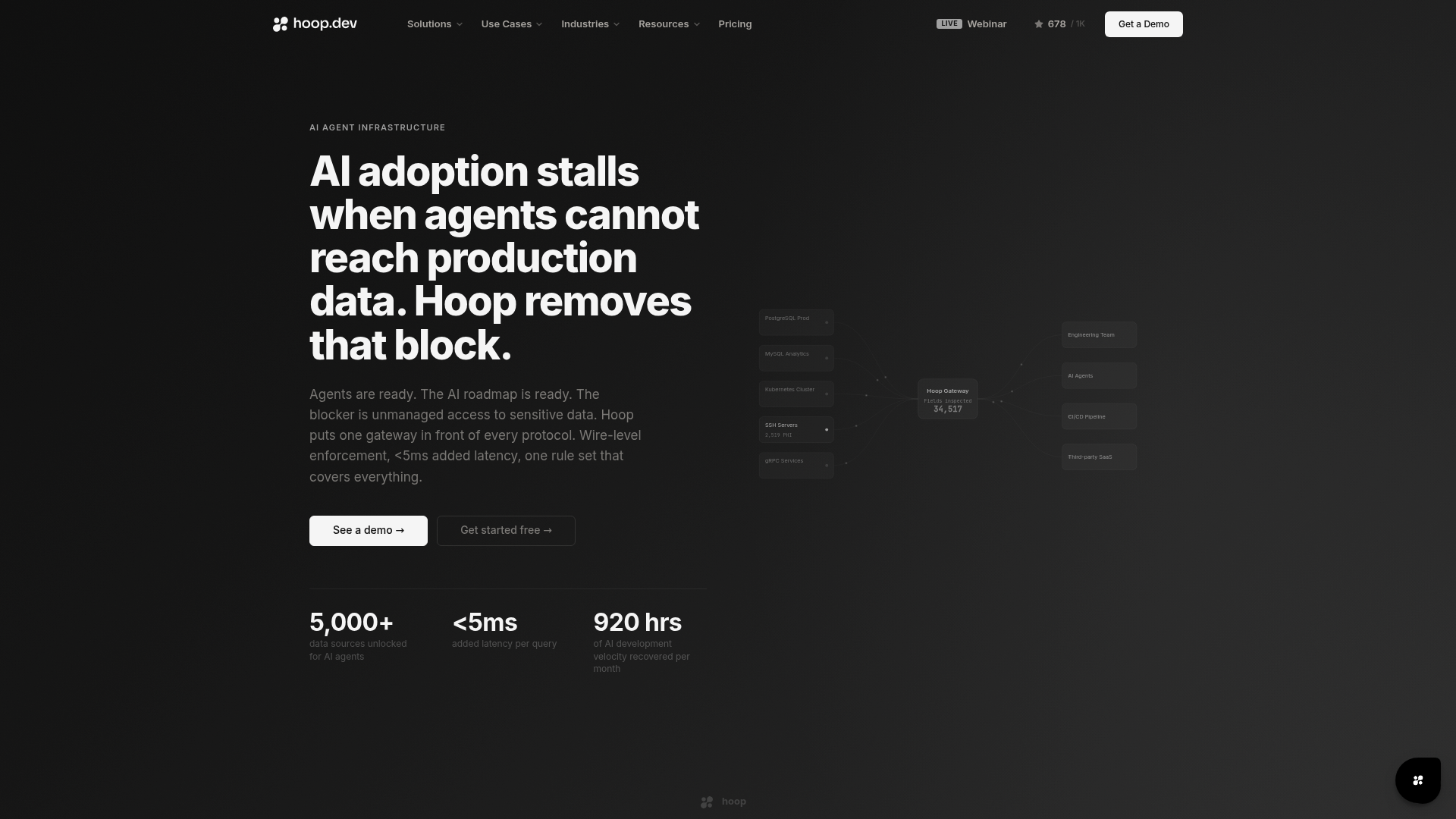
- Inline compliance prep: Use tools like hoop.dev that automatically record every command, approval, and masked query. This gives you audit-ready proof without manual screenshotting or log collection.
By using User Tasks within a visual workflow, you can clearly define where the machine ends and the human begins. This ensures that everyone knows their role and the system never stops moving because of a lack of clarity.
From automation to autonomy: Training your system with every review
Human-in-the-loop isn't just a safety net, it's a training mechanism. Every time a human corrects an AI output, they are providing high-quality data that can be used to fine-tune the system. This process, often called Reinforcement Learning from Human Feedback (RLHF), is how you move from basic automation to true autonomy.
This path is called progressive autonomy. You start with heavy oversight, perhaps reviewing 100% of outputs for the first 30 days. As the system proves its accuracy and your team builds trust, you systematically loosen the guardrails. You move to spot-checking, and eventually to only reviewing flagged exceptions.

The goal is calibration. You need to ensure that when the AI says it is confident, it actually is correct. By measuring accuracy and override rates from day one, you can make data-driven decisions about when to step back and let the automation run.
Get started with human-in-the-loop automation today
If you're ready to explore what automation could look like for your business, but you want to maintain the control that growing businesses need, the best path forward is to start small.
- Pick one high-volume, low-risk process: Start with something like data entry or simple file processing. Build a "win" and get your team comfortable with the system before moving to client-facing workflows.
- Map your processes by risk: Identify which tasks are low, medium, or high risk. This will help you decide which oversight pattern (HITL, HOTL, or HOOTL) is right for each step.
- Focus on the ROI: Look for the "quiet gains." The goal isn't a flashy new tech stack, but rather fewer handovers, fewer mistakes, and more consistent, on-time reporting.
At Mushin, we're here to help you navigate this transition. We offer a friendly discovery call where we can walk through your current manual work and show you what realistic, guarded automation looks like.
Our mission is to help you reach that state of "mind without mind," where your tools disappear because the work just gets done. If you're ready to see how intelligent automation can give you back hours in your week, Book a Discovery Call with us today.
Frequently Asked Questions
What does it mean to Stay in control with human in loop automation?
Staying in control means designing your AI workflows with intentional checkpoints where a human reviews, approves, or corrects the AI's output before it reaches production. This ensures that you get the speed of automation without the risk of unchecked errors or hallucinations.
Does human in loop automation slow down the business process?
Not if it is designed correctly. By using confidence scores and batch reviews, you can focus human attention only on the high-risk or low-confidence tasks. This allows most of the workflow to proceed at machine speed while maintaining human-level quality control where it matters most.
Which tasks are best suited for Stay in control with human in loop automation?
Any task that is high-stakes, irreversible, or regulated is a prime candidate. This includes financial transactions, legal compliance checks, and high-value customer communications. Low-risk tasks like internal data formatting can often run with less frequent oversight.
How does human feedback improve a Stay in control with human in loop automation system?
Every human correction serves as training data for the AI. Over time, the system learns from these corrections (a process called RLHF), which improves its accuracy and allows you to safely reduce the frequency of human review as confidence grows.
Is Stay in control with human in loop automation necessary for small businesses?
Yes, and often it's even more critical for small businesses. A single AI error that damages customer trust or leads to a financial mistake can be devastating for a smaller team. HITL provides the "seatbelt" that allows small businesses to compete at scale safely.
How do I know when to remove the human from a Stay in control with human in loop automation workflow?
You should use data to make that decision. Track your system's accuracy and human override rates over time. When the system consistently performs above your quality threshold (like 99%+) across hundreds of outputs, you can move from active review to spot-checking, but you should rarely remove oversight entirely for high-stakes processes.
Ready when you are
See what intelligent automation could do for your business
A friendly 30-minute conversation. No tech background required, no hard sell — just a look at the manual work slowing you down.
Book a Discovery Call